
A version of this story ran in Ontario Farmer: “Rethinking wheat rows: Ontario farm tests the potential of wider seed spacing”
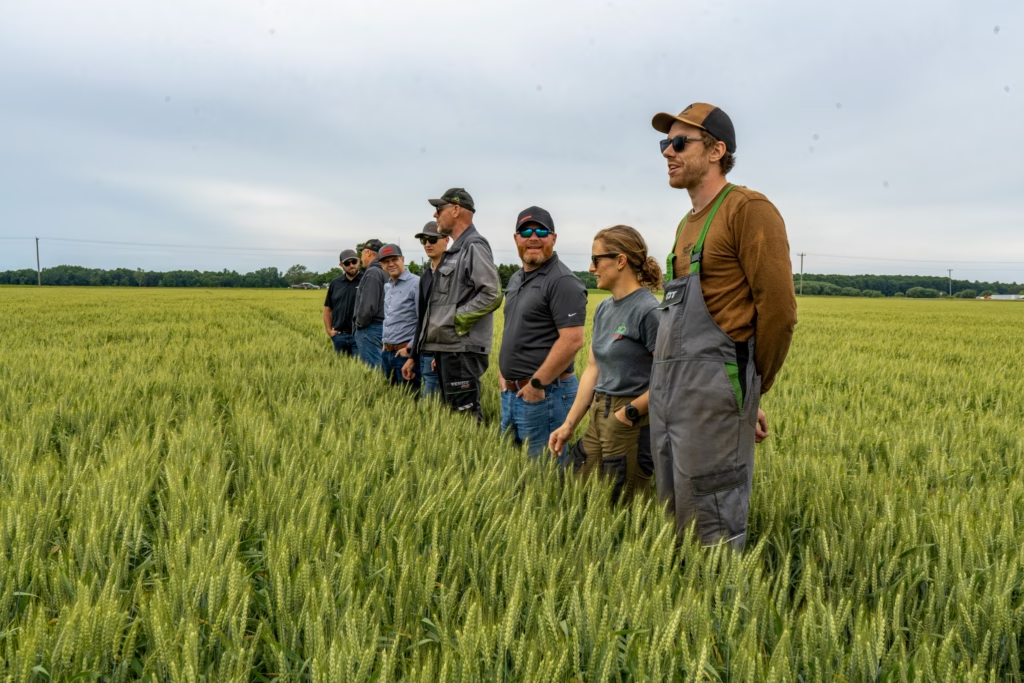
Ten-inch rows used to be the standard. Then 5-inch spacing took over most of Canada. Now one Huron County farm is asking whether wider rows deserve a second look – and HJV Equipment was there to help run the test.
Last fall, the Claussen family near Brucefield planted a wheat field (Pioneer 25R65) following soybeans, splitting it into two seeding systems: 10-inch rows with a HORSCH Avatar 9.25 SD, and standard 5-inch rows with a Väderstad Rapid. Same field, same fertility program, same crop year – just two different ways of putting seed in the ground.
Same program, two spacings
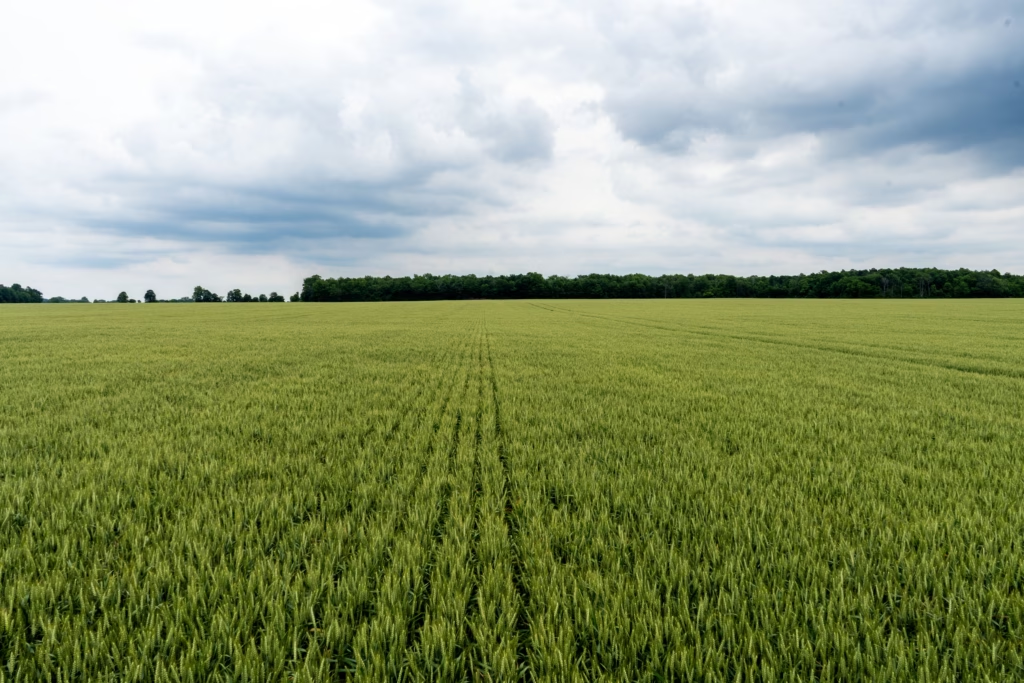
Both sides of the trial ran on identical inputs: 165 pounds of nitrogen per acre, 24 litres of sulphur per acre, no herbicides, a two-shot T2 Motis application, and a T3 fungicide. Seeding rate stayed consistent too, at 1.4 million seeds per acre with 80–85 pounds of MAP starter, even though there was talk of adjusting the rate for the wider rows.
That was on purpose. The goal wasn’t to fine-tune every variable in year one – it was to get a clean starting point.
“Ten-inch rows may need some changes going forward, but we needed to start with something so we could learn from it,” the Claussens said. “You never really know until the combine runs.”
What showed up in the field
Weed pressure stayed limited across the trial, with the 10-inch rows closing in well enough to keep weeds from getting a foothold. Yellow dwarf virus turned up in both treatments – a spring infection not expected to hit yield hard, and not tied to one row spacing over the other.
Some height variation showed up near the front of the field, but that traced back to grain buggy traffic and road access compacting the ground, not the row-spacing comparison itself.
On the equipment side, the trial made the differences between the two seeders clear. The Avatar’s longer row-unit arms held a more consistent stand as soil conditions shifted. The Rapid, with its shorter arms, showed more limitations once the ground got harder.
A dealer-led trial that didn’t slow anyone down
For HJV, the value of a trial like this is in how it fits into a working farm’s schedule – not around it.
“Overall, the demo on 10-inch worked out very well,” the Claussens said. “If there was a way to do a demo, HJV did it well. They brought the tractor, came in, ran, didn’t hold us up and we finished the field after the test plot was in. It was easy.”
The numbers off the combine
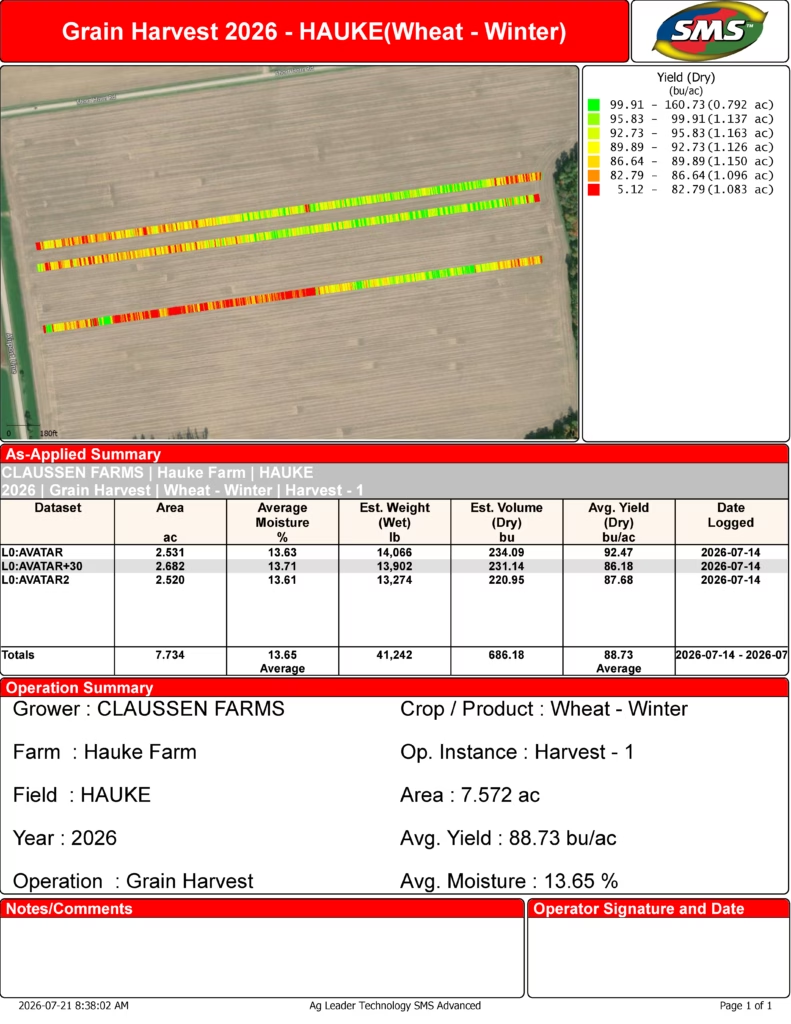
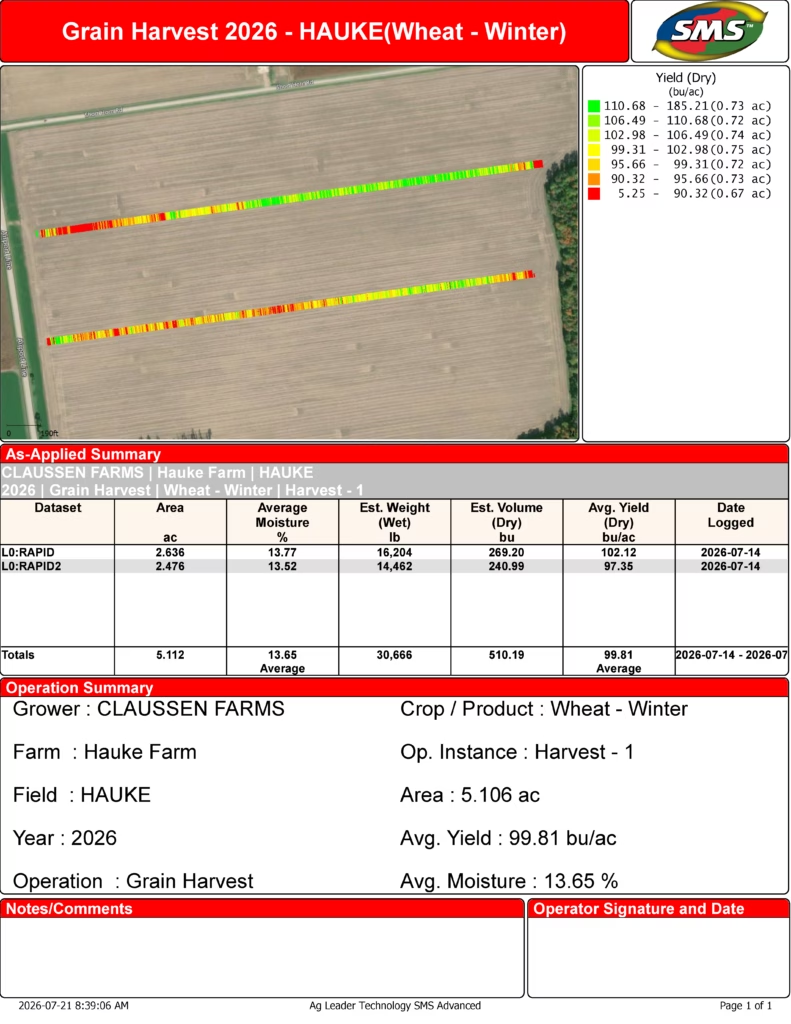
Harvest data from the Hauke field backs up what the season showed. Across 7.57 acres of 10-inch rows seeded with the Avatar, the field averaged 88.73 bushels per acre. The 5.11 acres seeded with the Rapid on 5-inch spacing came in at 99.81 bushels per acre – a gap of about 11 bushels per acre in favour of the tighter spacing.
| Area (acres) | Avg. yield (bushels/acre, dry) | Avg. moisture | |
|---|---|---|---|
| Avatar (10-inch) | 7.57 | 88.73 | 13.65 per cent |
| Rapid (5-inch) | 5.11 | 99.81 | 13.65 per cent |
Moisture came in identical across both treatments, so the yield difference isn’t a drying artifact – it’s a real spacing effect worth digging into for year two.
Worth another look
One year of data doesn’t settle the question of whether 10-inch spacing has a future in Ontario wheat. The wider rows gave up roughly 11 bushels per acre to the 5-inch stand this time around, and the Claussens and HJV are still working through what drove it. But the stand held up, the equipment performed, and there’s enough here to run it back.
The Claussens are already planning a second trial this fall – smaller acreage, a different wheat variety, and another season of data to build on.
Want to see how the Avatar would run on your acres? Talk to the HJV Equipment team about a demo.